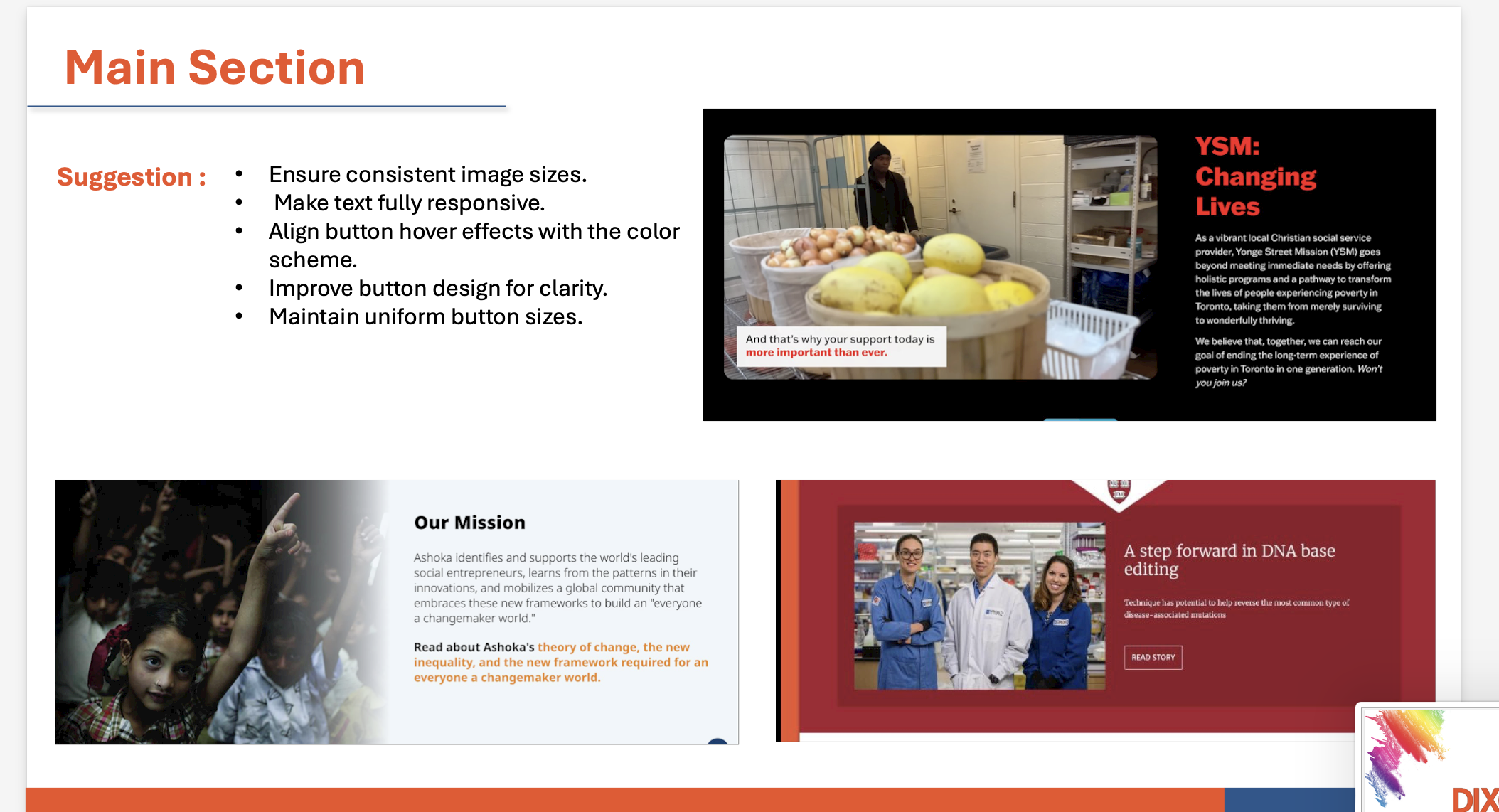
Methodology Overview
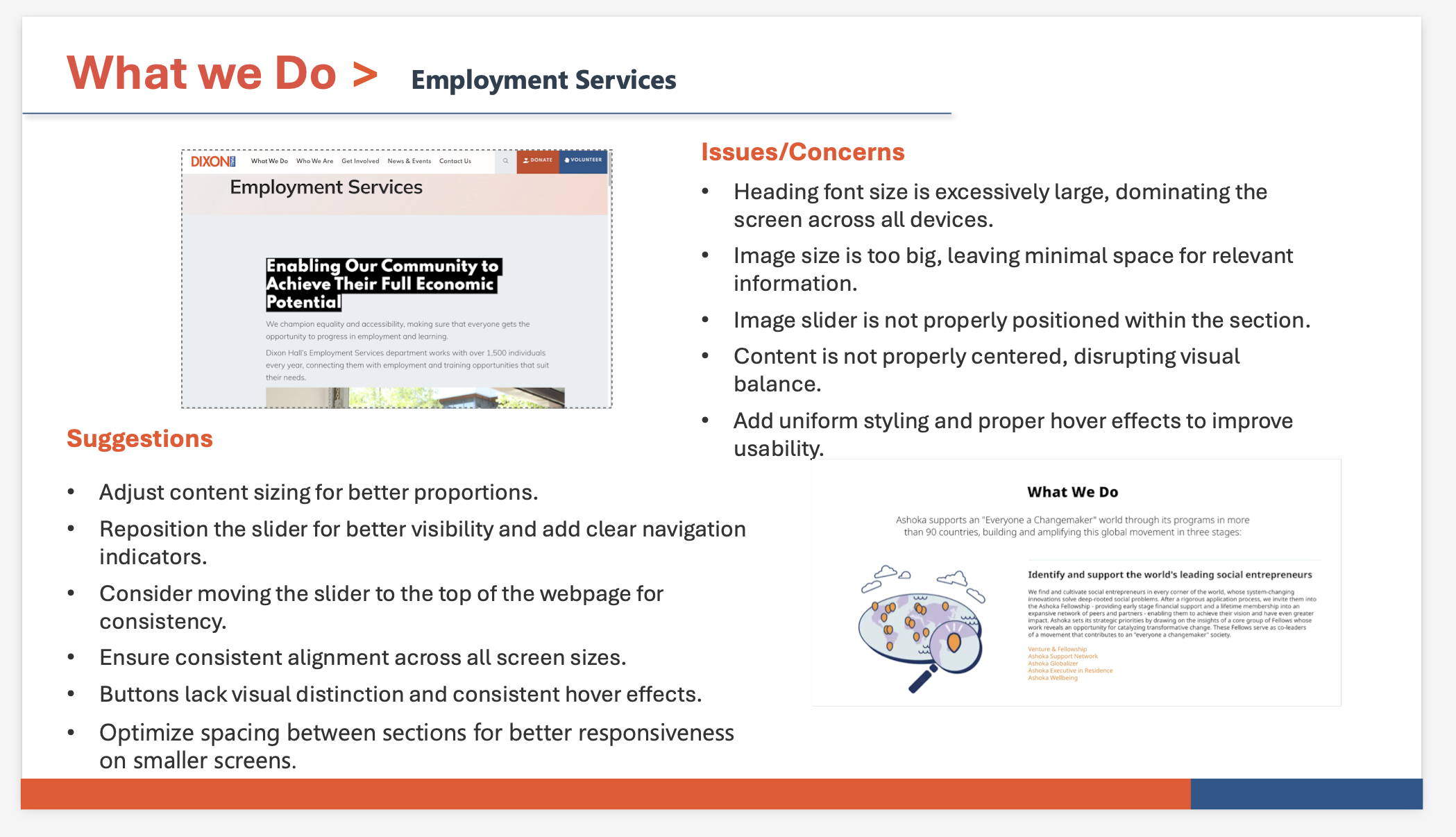
Survey Findings
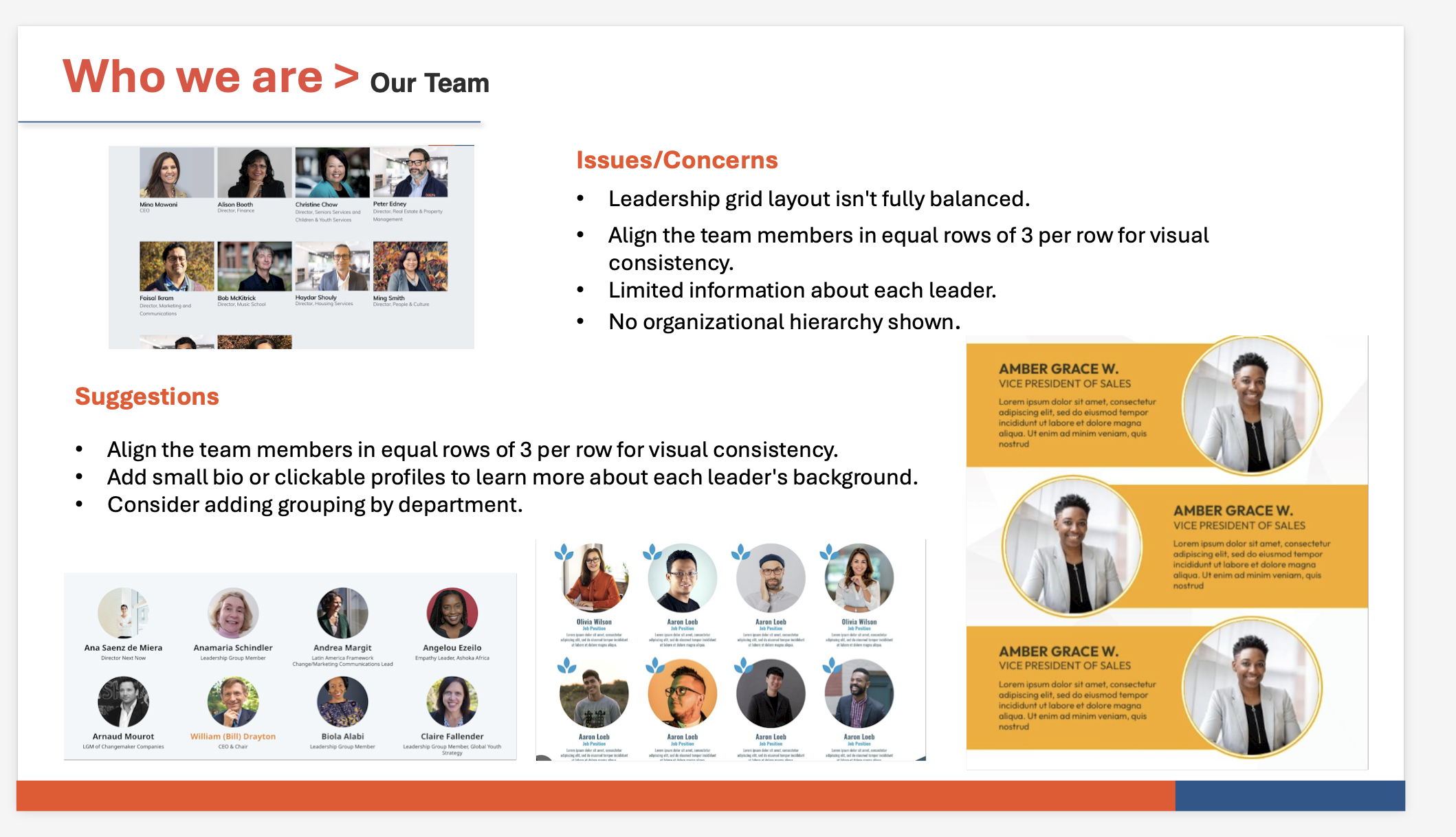
Recommendations
Research Deck
Key Metrics
01 — Overview
0
% Mobile Users
0
% Booking Friction
0
% Tour Interest
This collaborative research initiative focused on user needs, pain points, and content accessibility for the redesign of Toronto's historic Diction Hall website.
The team combined user surveys, stakeholder interviews, and competitor reviews to understand how visitors searched for events, history, and booking information.
The resulting recommendations gave the design team a clearer path toward better mobile navigation, stronger storytelling, and easier booking discovery.
→ Presentation deck used to communicate methods, findings, and redesign recommendations
02 — Process
01
Define the study around user needs, pain points, and content accessibility for the new site.
02
Blend user surveys, staff interviews, and competitor analysis to balance scale with depth.
03
Translate raw observations into booking friction, device behavior, and content-interest themes.
04
Package the evidence into slides and recommendations the redesign team could act on quickly.
The research gave us confidence about what needed to change first instead of redesigning by instinct. — Project Team Reflection
03 — What Was Built
The project synthesized survey responses, interviews, and competitive observations into one decision-making tool.
A major finding showed users struggled to locate booking information quickly, especially on mobile.
Staff interviews helped balance promotional content with the need to foreground history and tours.
The research surfaced mobile usage, tour interest, and navigation barriers as the strongest signals.
Slides translated raw data into a concise story the redesign team could immediately act on.
Clear next steps supported improved navigation, event visibility, and content accessibility.
— Visual Showcase
04 — Results